
The conversation around European competitiveness often centers on a single, pressing question: Why does a continent with world-class talent struggle to fund its own breakthroughs? As the “innovation deficit” becomes a central theme for policy-makers and investors alike, the shift from public markets toward high-growth private equity has never been more critical.
Heiko de Boer, Country Head for the Netherlands & Nordics at Pictet Asset Management, is at the forefront of this transition. With a background in econometrics and a focus on institutional asset management, Heiko specializes in identifying the global megatrends, from deep tech to the energy transition, that are reshaping the European economy.
We spoke to Heiko to discuss whether European capital is finally moving fast enough to create the next generation of tech leaders.
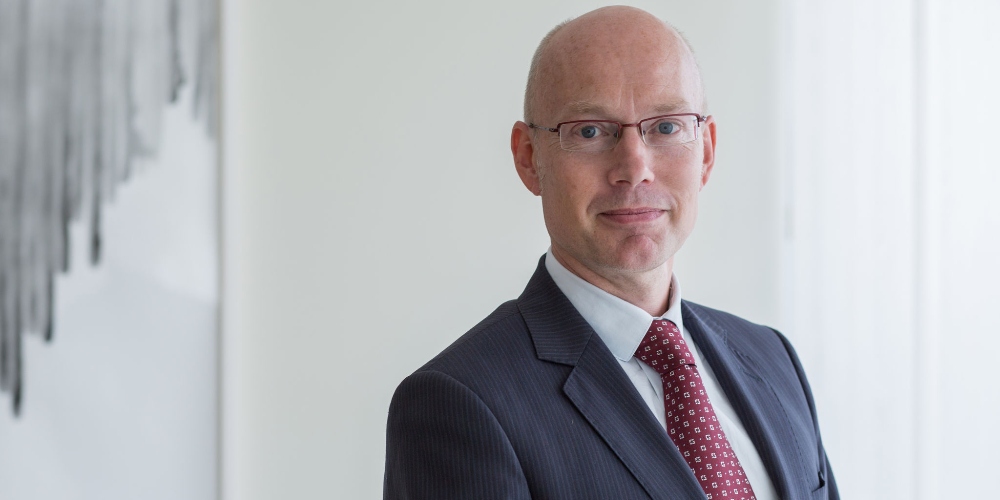
- Heiko, thank you very much for agreeing to do the interview. You’re the Country Head Netherlands & Nordics at Pictet Asset Management, dedicated to asset management for institutional investors, financial intermediaries, and their clients globally. Tell us a bit about your mission.
My mission is to offer impactful investment strategies and funds to our clients. Financial returns can be realised via publicly listed markets and via private market funds. For both, non-financial criteria can be considered at all times, as every investment will have some impact.
- Europe is often accused of an “innovation deficit.” Do you think there is sufficient appetite for high-innovation assets, or is the European regulatory environment still steering toward more traditional, “safe” sectors?
There is a growing appetite for high-innovation assets, driven by the recognition that in Europe, we need to invest more into our own future. It will take time to reduce the regulatory burden for investors, and there is certainly less of a risk-taking culture here. Retail investors and large institutional asset owners often have no significant history of investing in high-risk innovation, such as startups or venture capital.
Dutch proposals to significantly tax investment returns from 2028 onwards do not help in this regard. However, I am confident these are temporary hiccups. Slowly but surely, the “innovation deficit” will be closed; there is simply too much talent and opportunity in Europe to ignore.
- Pictet Asset Management is a pioneer in thematic investing. In your experience, do European investors prioritize supporting local innovation, or are they increasingly indifferent to geography as long as they are capturing global megatrends?
With our long-term thematic investing approach, we are pure bottom-up investors, picking the best stocks out of a global universe. Although most European investors have a similar global mindset, there has always been some degree of home bias.
With current geopolitical developments, discussions are taking place regarding whether this home bias should gain more attention. Investors are certainly less indifferent nowadays.
- Do you believe European capital is moving into private equity fast enough to compete with the US, or are we still too reliant on public markets to fund breakthrough innovation?
I believe European capital is currently moving fast into private markets in general, including a growing private credit market. There is a general belief that in order to create the next European tech leaders, investing in private equity and venture capital specifically is needed.
Large investors who previously under-allocated to venture capital are showing increasing interest, especially with a view to funding European innovation. Allocators see the opportunity to invest in European deep tech and resilience. There is a clear need for new technologies and a healthy supply of high-quality ventures.
- The Netherlands and the Nordics are often seen as leaders in the energy transition. Do you see this as the one sector where European capital is being deployed at the right scale, or is there still a significant funding gap compared to global competitors?
The energy transition remains a defining theme for decades to come. Being energy self-sufficient is a vital element of strengthening Europe’s resilience. I wouldn’t say there is a funding gap here, as this theme has the full attention of investors and asset owners.
However, there is a constant need to join forces and keep investing. Not just in existing clean energy infrastructure, but also in new technologies like nuclear, energy storage, and efficiency.
Thank you very much for sharing your story and insights, Heiko. We wish you the best of luck in your future endeavors.
Join our network of startups & investors!

 Log in with Linkedin